Business parks bring firms, staff, visitors and delivery teams together. They may share roads, car parks and gates, yet each tenant has different hours and access needs. This makes multi-tenant building security more complex than guarding one office.
Commercial Estate Security Leicester should reflect how people use the site. Managers need to know who enters each area, when it is busy and where extra checks are needed.
Why Does Commercial Estate Security Leicester Need a Coordinated Plan?
A shared entrance or car park links tenants, so one security gap can affect several firms.
Protecting Several Businesses Within One Estate
Each tenant has its own staff, visitors and private rooms. The estate manager may look after shared areas. Good multi-tenant building security sets out who is responsible for each space and where concerns should be reported.
Keeping Employees and Visitors Safe
Staff may arrive early or leave late. Clear signs, good lighting and a contact point help visitors find the right building and avoid restricted areas.
Securing Shared Facilities
Agree who checks shared car parks, loading bays and walkways, and who responds when a gate or light is damaged.
What Are the Common Security Risks in Business Parks?
Unauthorised Visitors
Someone may follow an employee through a door or enter during a delivery. Visitor checks and passes can reduce this risk.
Theft and Property Damage
Tools, laptops, vehicles and outdoor fixtures may be stolen. Check how valuable items are stored and which areas need better lighting or patrols.
Suspicious Vehicle Activity
Unknown vehicles may stop near loading bays or enter private roads. Clear parking rules help staff report concerns.
Gaps Outside Working Hours
Some units close at 5 pm while others run late shifts. Security cover should reflect each tenant’s hours.
What Security Measures Should Every Business Park Consider?
Start with doors that close, working gates, good lighting and clear visitor routes. CCTV can record activity, but it needs lawful use and someone responsible for checking footage. Alarms need named contacts who can act.
Written rules should explain after-hours doors, delivery areas and how to report damage. The estate manager and tenants should share these rules so one business does not weaken another’s controls. Regular checks can find faults before they become security gaps.
Controlled Entry and Exit Points
Set entry rules for staff, visitors, contractors and drivers. Keep emergency exits clear and accessible.
Perimeter Security and Lighting
Check gates, fences and outer doors. Light paths, car parks and loading areas without causing glare nearby.
CCTV, Alarms and Inspections
Cameras and alarms support, but do not replace, clear procedures. Keep records of checks and repairs.
How Should Business Premises Access Management Work Across Multiple Tenants?
Access rules should be clear to every tenant. Business premises access management sets who can enter, who approves visitors and where unclear requests go.
Staff, Visitors and Contractors
Each business should tell reception who to expect. Contractors may need a work order, a named contact and access only to the agreed area. Return temporary passes after the visit.
Deliveries and Vehicle Access
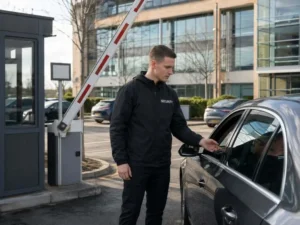
Set delivery times and mark loading areas. Drivers should know where to report. Guards can check details and contact the tenant if something does not match. Set a process for late deliveries and visitors who arrive when their contact is not available.
Protecting Individual Business Units
Shared gates do not give every tenant access to every office. Use separate permissions for private units and stores, and record keys and passes.
How Can Professional Security Guards Protect Business Parks?
Guards put site rules into practice. Written instructions should set out entrance checks, visitor duties, patrols and reporting.
Monitoring Entrances and Reception Areas
A guard can ask who a visitor is meeting and contact the right business. Unclear requests should go to an authorised person.
Carrying Out Internal and External Patrols
Patrols may cover office blocks, car parks, gates and walkways. Guards should record checks and report damage or unusual activity. Routes may vary to cover different areas, but each patrol should follow the agreed brief and leave a clear record.
Responding to Incidents
For an incident, guards should follow the site plan, contact the right manager and call emergency services when needed. Reports should state what happened and what action was taken.
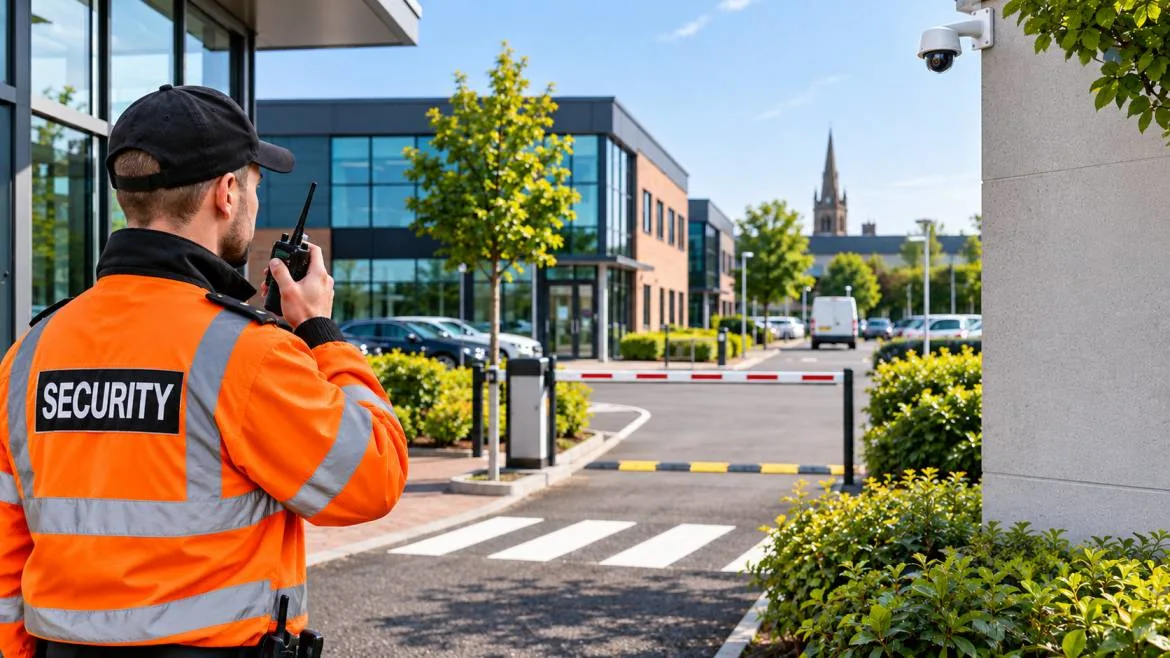
For a large estate, Business Park Security Leicester may include a fixed guard at the main entrance and patrols across other areas. The right mix depends on layout, hours and risk.
How Should a Commercial Property Risk Assessment Be Carried Out?
A commercial property risk assessment shows where security is needed. It should reflect how the site is used today.
Review the Layout and Access Points
Walk the site and note entrances, gates, car parks, loading bays and empty units. Check doors and sight lines.
Consider Risks Across the Estate
A unit beside a public road may face different risks from one in the centre. Review hours, stored goods, traffic and past incidents. Rank each concern by its chance of happening and the harm it could cause, then deal with the highest risks first.
Check Existing Measures and Update the Plan
Review patrol logs, alarm contacts, CCTV, access rules and incident records. Recheck the plan when tenants, building work or hours change.
Which Shared Office Security Solutions Suit Different Business Parks?
Shared office security solutions should match the site. A small block may need a reception post; a larger estate may need patrols.
Static Guarding
A fixed guard can monitor an entrance or reception, check appointments and contact tenants.
Mobile Patrols
Mobile patrols can check buildings, car parks and outer areas. They may suit sites with wide grounds or several vulnerable points.
Combining Services
Some estates use a fixed post by day and patrols at night. Choose cover based on risks, budget and tenant needs. Check that each shift has clear handover notes, contact details and a way to report urgent problems.
How to Choose a Business Park Security Provider in Leicester
Ask how the provider will learn the site, set guard duties and report concerns. Check its commercial estate experience, absence cover and incident process.
Check officers have the training and licence needed for their duties. Officials say a front-line SIA licence is generally required when a person carries out a licensable activity under a contract for services. In-house roles are usually treated differently. Read the SIA licensing guidance for the details.
Ask for patrol plans, handover notes and incident reports. When comparing Commercial Estate Security Leicester providers, check the duties, hours and review process, not just the price.
Conclusion
A business park needs clear access rules, checks on shared spaces and a plan that fits each tenant. Commercial estate security Leicester should reflect site risks and change as the estate does. Clear duties and good communication help protect staff, visitors, vehicles and property. Speak with our team to discuss suitable security cover for your business park.
Frequently Asked Questions
What Security Services Does a Business Park Need?
It may include a reception guard, access checks, patrols, CCTV or alarm response. A site review helps set the right mix.
How Can Security Guards Protect Multiple Businesses?
Guards can check visitors, patrol shared areas and report issues to the right tenant or manager.
Why Is Access Control Important in Commercial Estates?
It separates public areas from private offices and helps tenants approve visitors, contractors and deliveries.
Are Security Patrols Necessary for Business Parks?
Patrols may help on sites with large grounds, empty units, or areas not watched from reception.
Can Business Park Security Operate Outside Normal Working Hours?
Yes. Evening, night or weekend cover can match tenant activity and site risks.